Common Beginner Trading Mistakes and How to Avoid Them
Most beginner losses don't come from a single bad call - they come from a handful of habits that repeat quietly across many trades until they add up. Recognising them is usually simpler than fixing them, but recognising them is where every fix starts.
This guide covers the mistakes that show up most often in the first weeks of trading, and what to do differently instead.
Trading Without a Written Plan
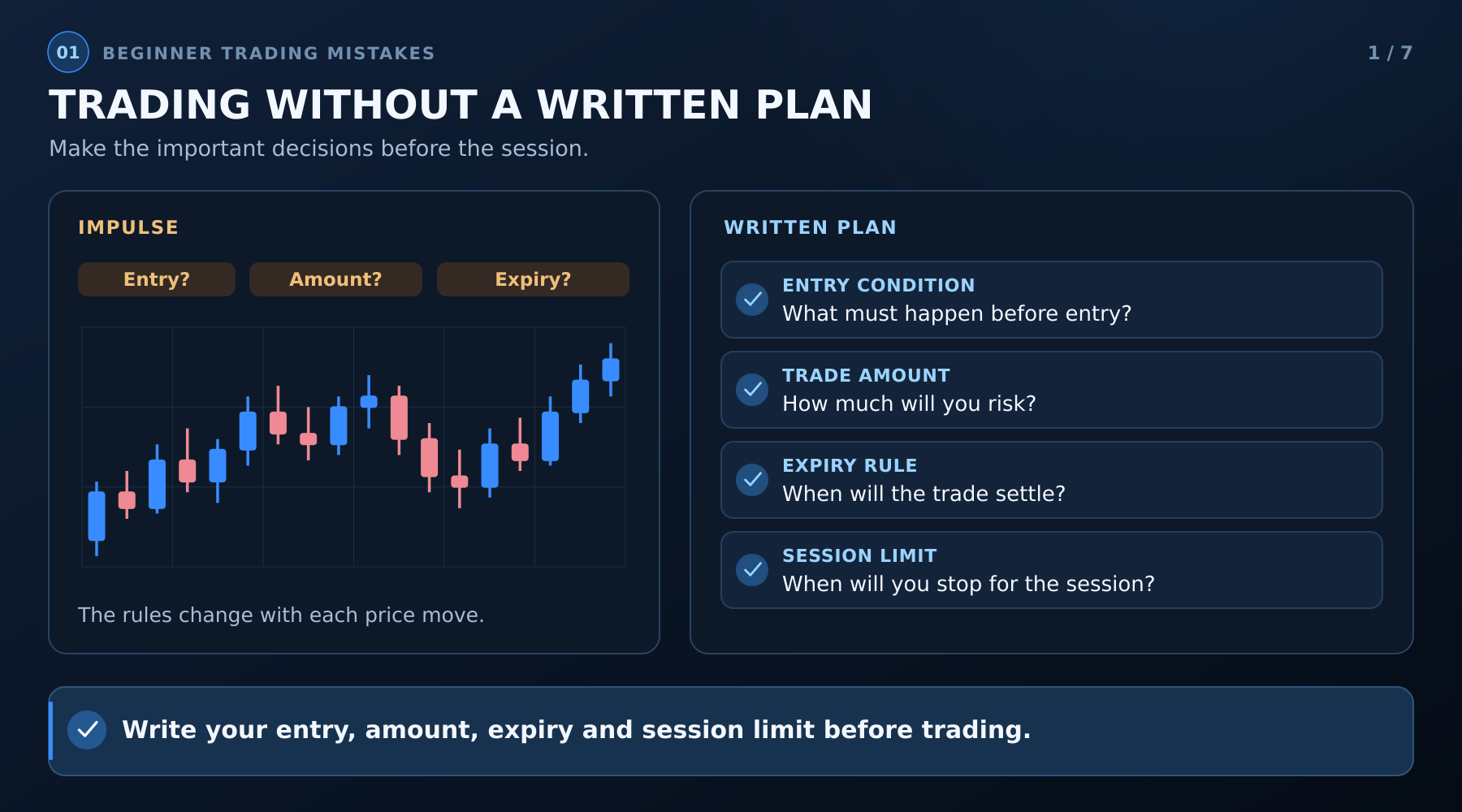
Deciding what to trade, how much to risk, and when to exit while you're already looking at a moving chart almost always means deciding based on impulse rather than a repeatable process. A plan written down before the session - even a short one - is what a decision made under pressure gets compared against.
Fix: write your entry condition, trade amount, expiry rule and session limit down before you open the platform. Our guide on what a trading strategy should include covers what a complete plan needs.
Entering Before Confirmation
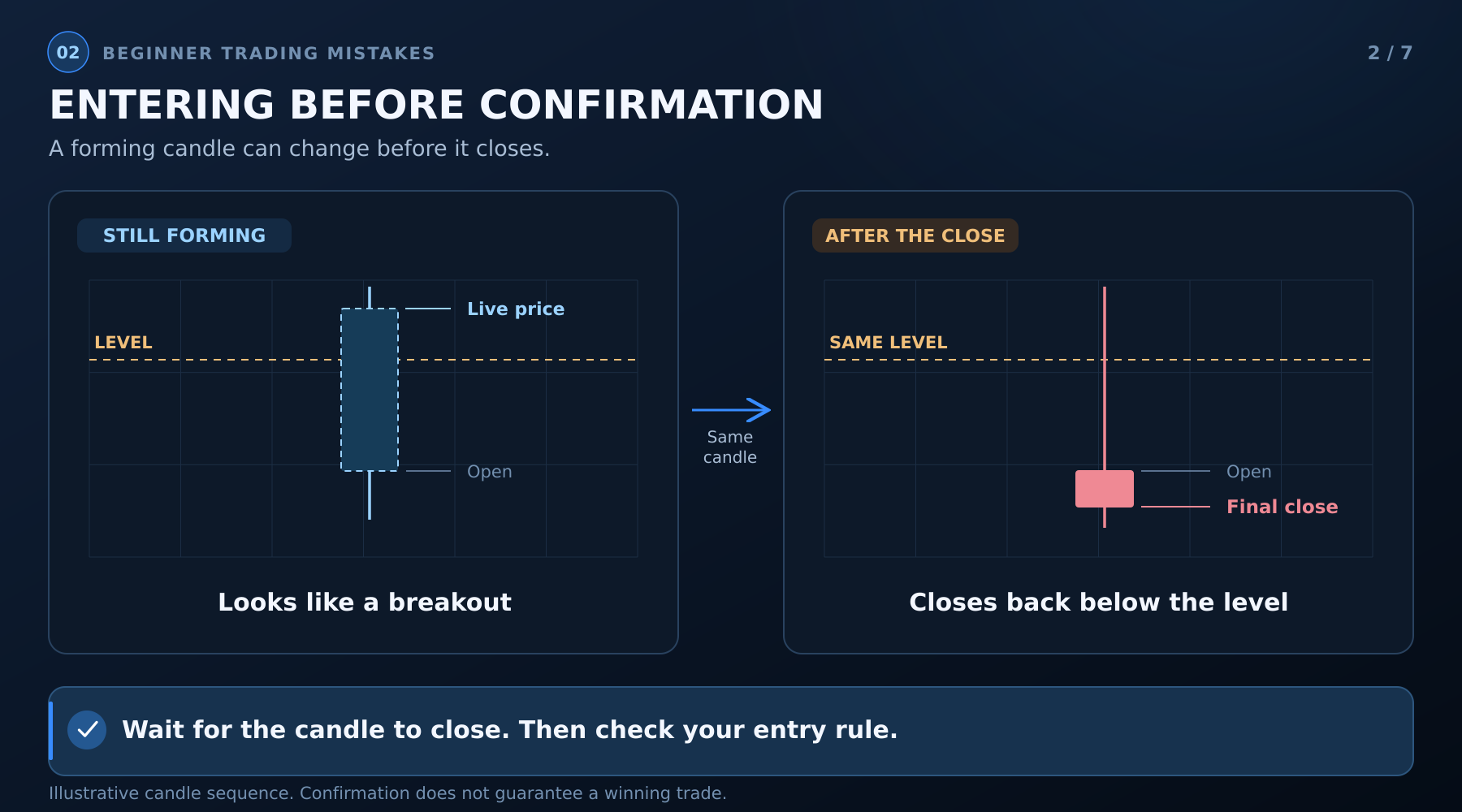
A candle that looks like it's about to close in your favour can still reverse before it actually does. Entering early because "it looks like it's already happening" trades a small timing advantage for a much larger chance of being wrong.
Fix: wait for the candle to actually close before entering, even when it feels like you're giving something up by waiting. The delay costs seconds; entering on an unconfirmed move costs the whole trade when it reverses.
Increasing Size After a Win - or a Loss
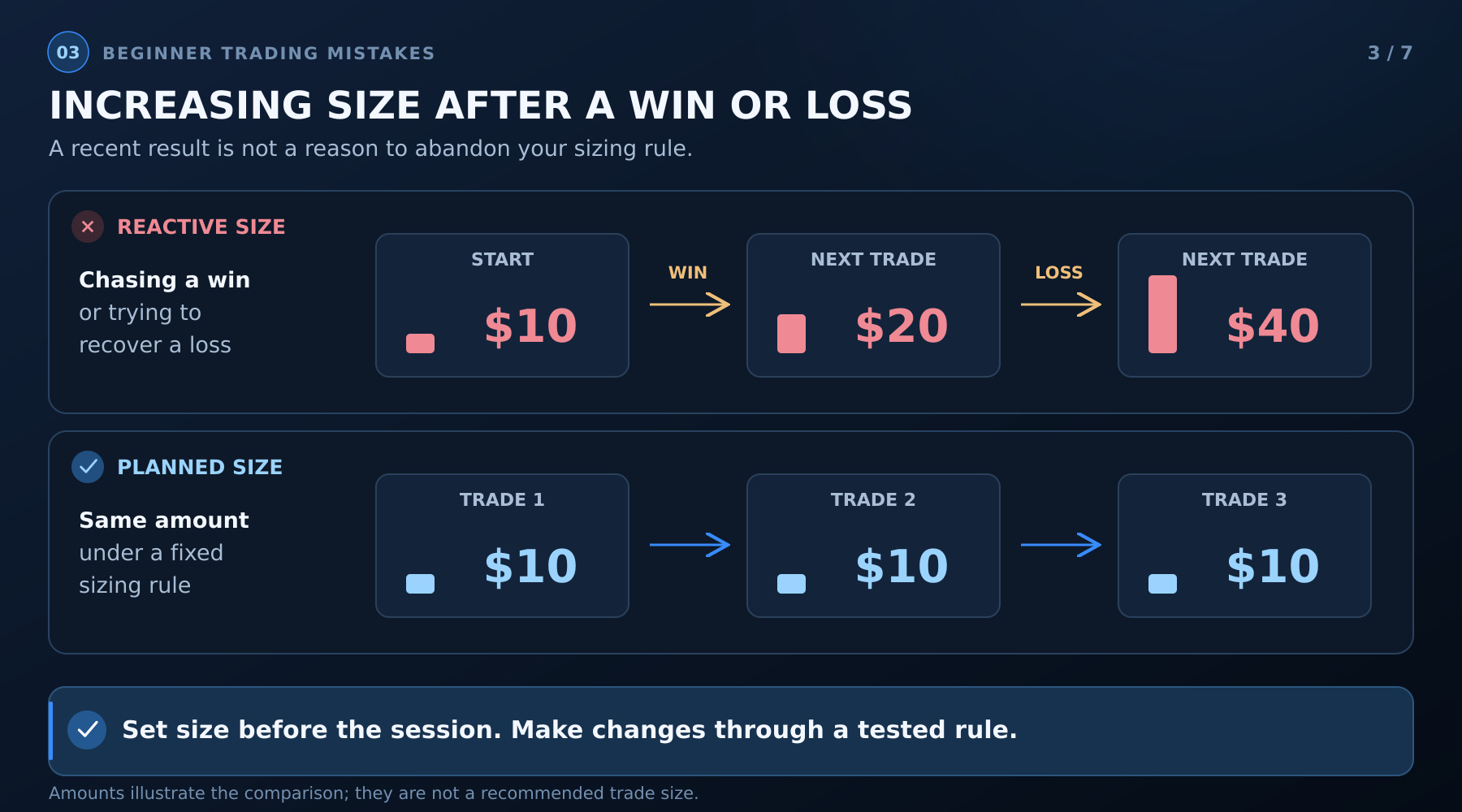
Both directions are common, and both break the same rule for different reasons. Increasing size after a win assumes a short streak proves the strategy has become more reliable. Increasing size after a loss is usually an attempt to recover it quickly - sometimes called revenge trading - and tends to abandon the original entry rules in the process.
Fix: decide your trade size before the session and keep it fixed regardless of the last result. If you want to adjust size systematically, do it as a planned rule tested over time, not a reaction to what just happened.
Not Separating Outcome From Process
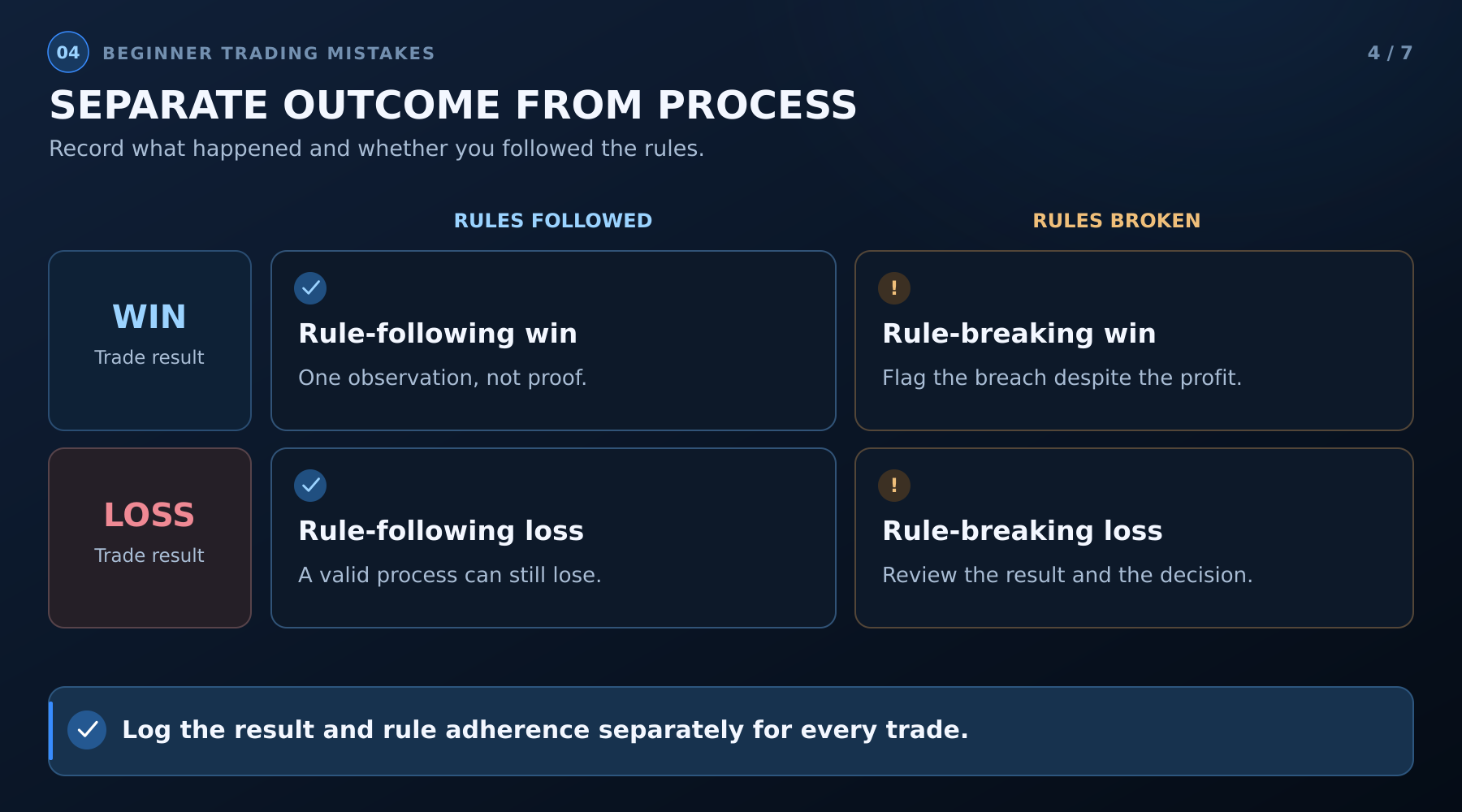
A trade can win by accident, breaking every rule you'd written down. A trade can lose despite following the plan exactly. Judging a trade only by whether it won conflates two different questions: was the result good, and was the decision good. They're not the same thing, and conflating them is how a bad habit gets reinforced just because it happened to pay off once.
Fix: record both separately for every trade - the result, and whether it actually followed your rules. Our trading journal guide covers this distinction with worked examples.
Skipping the Demo Stage
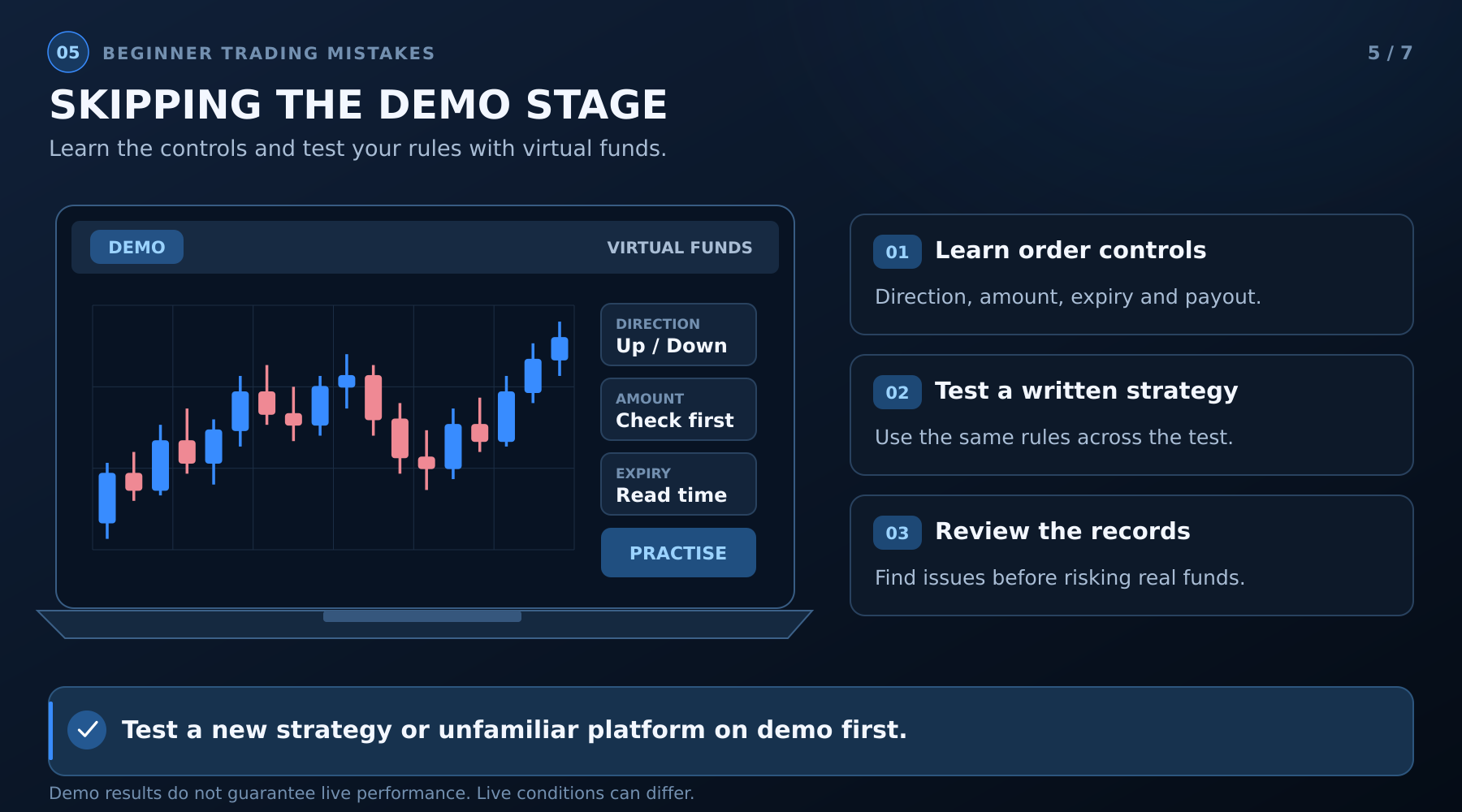
Moving to live trading before testing a strategy on demo means your first real losses double as your first lessons about whether the approach even works. It also means you're learning the platform's interface - how orders are confirmed, how expiry displays, how payouts are shown — with real money attached, instead of beforehand.
Fix: test any new strategy, and any platform you haven't used before, on an online trading demo account first. Treat it as a genuine test, not a step to rush through.
Not Keeping Records
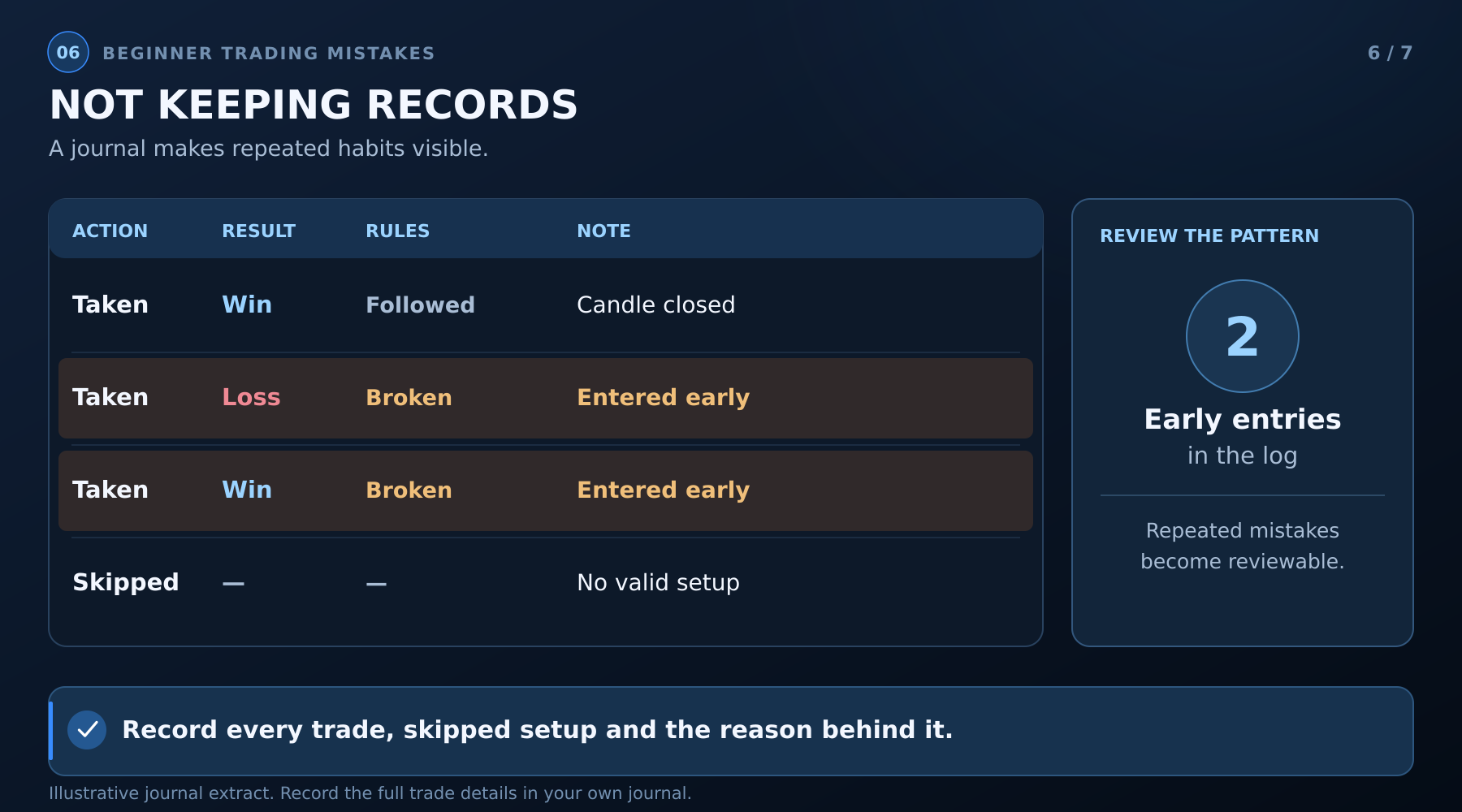
Without a record, review becomes guesswork - you're left relying on memory, which tends to remember dramatic wins and losses while quietly forgetting the ordinary ones that make up most of a session. A pattern like "I keep entering early" is invisible until it's written down across enough trades to actually see it.
Fix: log every trade you take, and every setup you skip, starting from your very first one. Waiting until "it starts mattering" means losing the data from exactly the period when you're making the most mistakes and could learn the most from them.
Treating Every Session as One That Must Produce a Trade
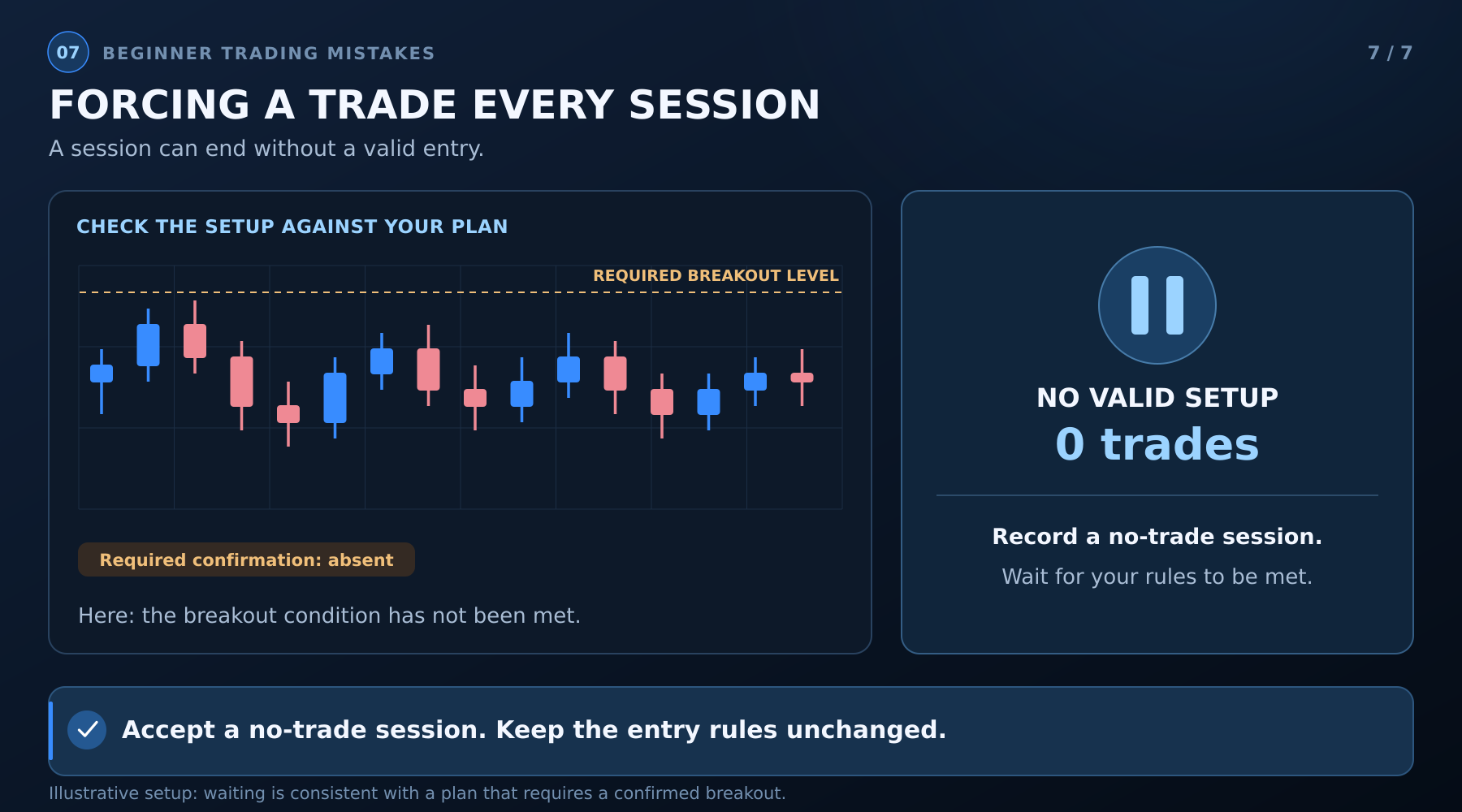
Sitting down to trade can create pressure to find a reason to enter, even when the market isn't offering a setup that matches your rules. The longer you stare at a chart without a valid setup, the easier it becomes to convince yourself one exists anyway.
Fix: accept that some sessions won't offer a trade that fits your plan, and log a no-trade session when that happens instead of forcing one. A skipped trade costs nothing; a forced one can cost the exact amount you were trying to avoid risking carelessly.
Frequently Asked Questions
Which of These Mistakes Matters Most for a Beginner?
Trading without a written plan tends to be the root cause behind most of the others — the rest are largely different ways that gap shows up in the moment. Fixing that one first tends to make the others easier to catch.
How Do I Know If I'm Making These Mistakes?
A trading journal is the most direct way to find out - patterns like early entries or size creep are hard to see in the moment but become obvious once several trades are written down side by side. See our guide to keeping a trading journal for a template.
Can These Mistakes Happen Even With a Good Strategy?
Yes - a sound strategy doesn't protect against poor execution. A good set of rules that isn't actually followed produces the same inconsistent results as having no rules at all.
Risk notice: Trading involves a risk of losing the amount committed to a trade. Demo results and past performance do not guarantee future outcomes. This article is educational and does not provide personalised investment advice.