Risk Management for Beginners: How Much to Risk Per Trade
A profitable-looking week can hide a fragile approach, and a losing week can still reflect solid risk management. Win rate gets most of the attention from beginners, but how much you risk per trade - and how consistently you apply that - usually decides whether an account survives long enough for a strategy's real results to show up.
This guide explains how to approach risk management on Atlant Trade: choosing a trade amount, understanding the displayed payout, setting session limits and reviewing your results. It's educational information, not personalised financial advice - the right amount for you depends on your own circumstances and risk tolerance.
Why Risk Per Trade Matters More Than It Seems
Two traders can have the exact same win rate and end up in completely different positions, purely because of how much they risked on each trade. Risking a large share of an account on individual trades means a short losing streak - which happens to every approach eventually, including profitable ones - can do damage that a string of future wins takes a long time to recover from.
Risk management isn't about avoiding losses. Losses are a normal part of any trading approach. Its purpose is to limit the impact of individual losses and losing streaks on your account.
Fixed Amount vs a Share of Your Account
.webp)
There are two common ways beginners decide how much to risk per trade:
- A fixed dollar amount - the same stake on every trade, regardless of account size. Simple to apply consistently, but it doesn't adjust as your account balance changes.
- A fixed share of your account balance - a consistent percentage, recalculated as your balance moves. This scales risk down automatically after losses and up after gains, but requires recalculating your trade size instead of using a round number.
Neither approach is inherently correct - many traders start with a fixed amount because it's simpler to apply consistently while they're still learning, and move to a percentage-based approach later. What matters most isn't which method you pick, but that you pick one and actually stick with it, rather than deciding trade size in the moment based on how confident you feel.
Why Payout Changes the Math
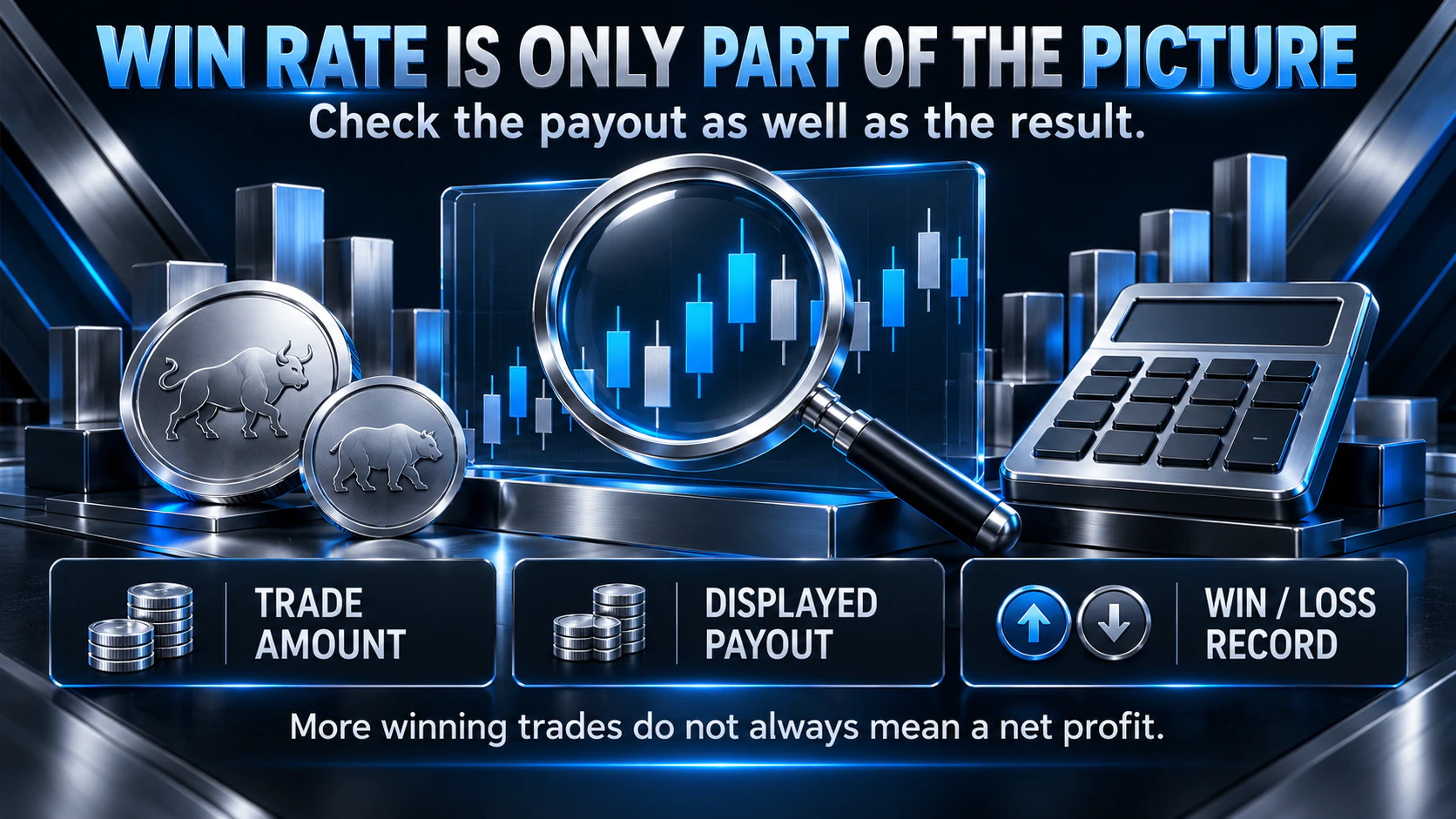
Risk per trade only tells half the story - the payout on a win determines how many of those trades you can afford to lose. A trade with an 85% payout returns less on a win than it costs on a loss, which means a strategy needs to win more than half its trades just to break even, not merely win "more often than it loses" in a loose sense.
For example: 100 trades at $10 each, 50 wins at 85% payout ($8.50 profit each) and 50 losses ($10 each) nets to −$75 overall, despite an exact 50% win rate. Risk management decisions - including how much you're willing to risk per trade - should account for this, not just for win rate on its own. Our trading journal guide explains how to record trade outcomes and review them alongside your decisions.
Practising Risk Management on Atlant Trade
Use your Atlant Trade demo account to practise applying a consistent trade amount before using real funds. Choose amounts that reflect the budget you intend to work with, rather than the size of the virtual balance. Before each practice trade, check the amount, expiry and displayed payout, then record whether the trade followed your plan.
The aim is to make these checks part of your routine. Keep demo and live results separate when reviewing your records.
Setting a Loss Limit for the Session
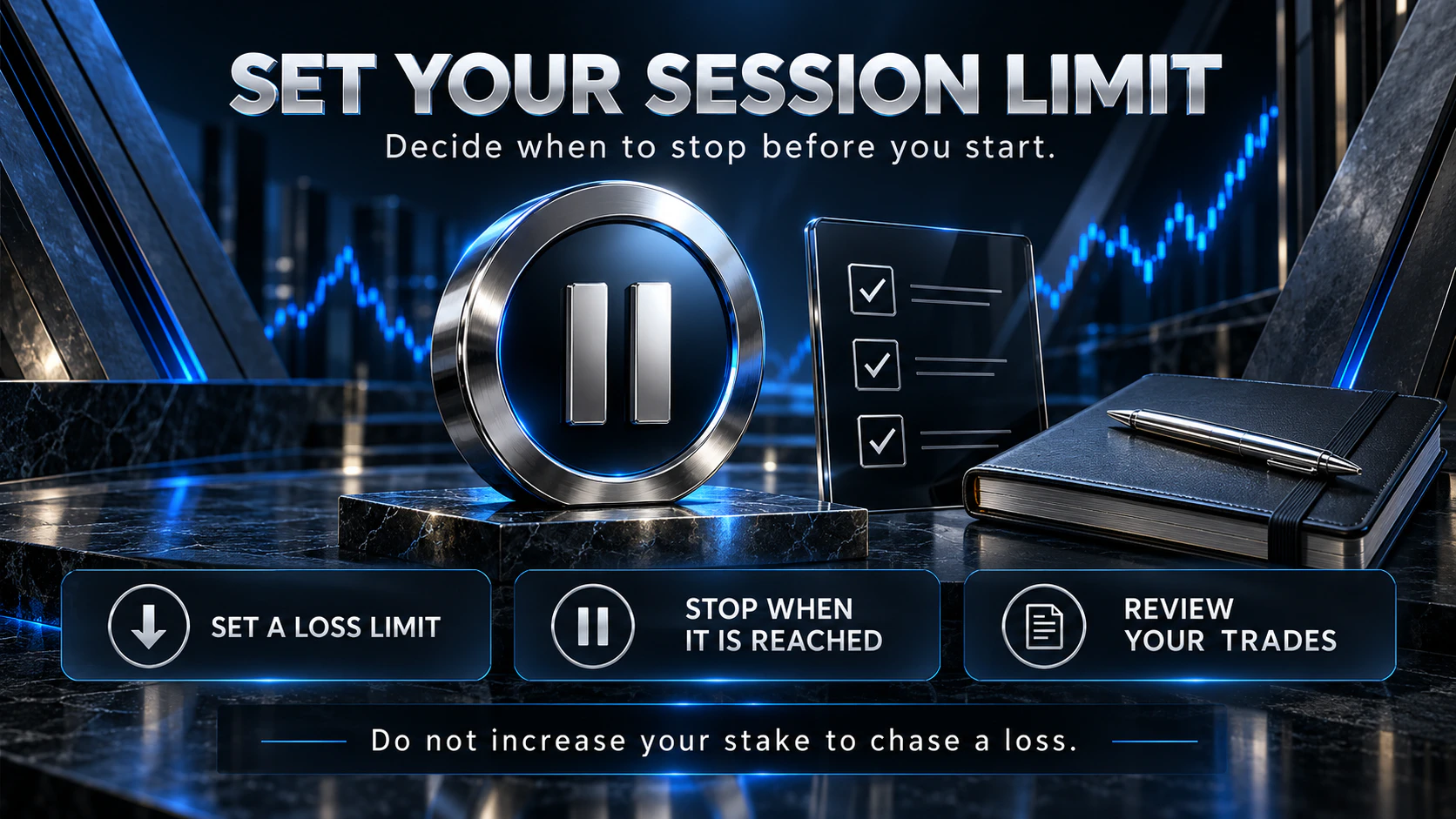
A per-trade risk limit controls one trade. A session loss limit controls the whole session - a fixed amount or number of losses that, once reached, ends trading for that session regardless of how the next setup looks.
This matters because judgement tends to get worse, not better, after a string of losses in the same session - which is exactly when a session limit is doing its job by removing the decision from you.
Avoiding the "Revenge Trade" After a Loss
One of the most common ways risk management breaks down isn't a single bad calculation - it's increasing trade size right after a loss, trying to recover it quickly in the next trade. This usually means abandoning your entry rules at the same time, since the trade is now being driven by the previous result instead of an actual setup.
A session loss limit and a fixed trade-sizing rule, applied together, are what make this harder to do in the moment - because the decision was already made in advance, not during the losing streak itself.
Tracking Risk Over Time
Risk management isn't only about individual trades - it's also about watching how your account balance moves over a series of them. Tracking drawdown (how far your results have fallen from a previous peak) shows you the real shape of your risk, which a simple win-rate number doesn't capture on its own.
Log this alongside your trades rather than trying to reconstruct it later. Our guide to keeping a trading journal explains how to organise your trading records for review.
Frequently Asked Questions
What's a Reasonable Amount to Risk Per Trade?
There's no single figure that applies to everyone - it depends on your account size, your tolerance for losses, and how many trades you plan to take in a session. What matters more than the specific number is applying it consistently and deciding it before the session starts, not while a trade is already in front of you.
Should I Increase My Trade Size After a Winning Streak?
Be cautious about doing this automatically. A short winning streak doesn't establish that a strategy has become more reliable - increasing size based on recent results, rather than a planned rule, is a common way risk management quietly breaks down.
Is Risk Management the Same as Having a Strategy?
No - they're related but separate. A strategy defines when you enter and exit. Risk management defines how much you risk when you do. Our guide on what a trading strategy should include covers where the two connect.
Risk notice: This article provides general educational information and is not personalised financial or investment advice. Trading involves a risk of losing the amount committed to a trade, and past performance does not guarantee future outcomes. Consider your own financial circumstances and risk tolerance, and seek independent advice if needed.